Home / Collection I / ESM-03
ESM-03
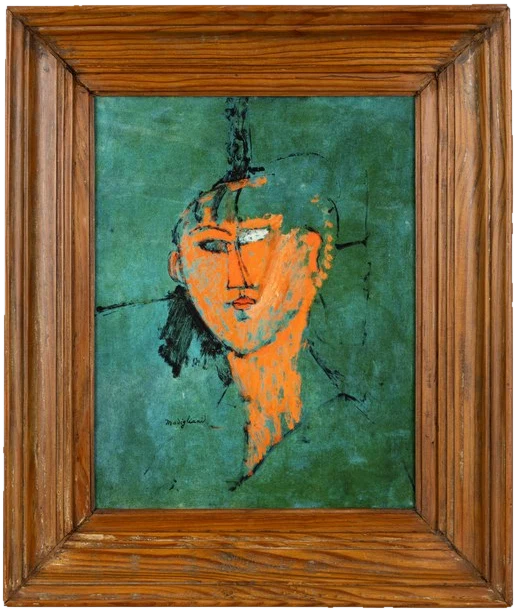
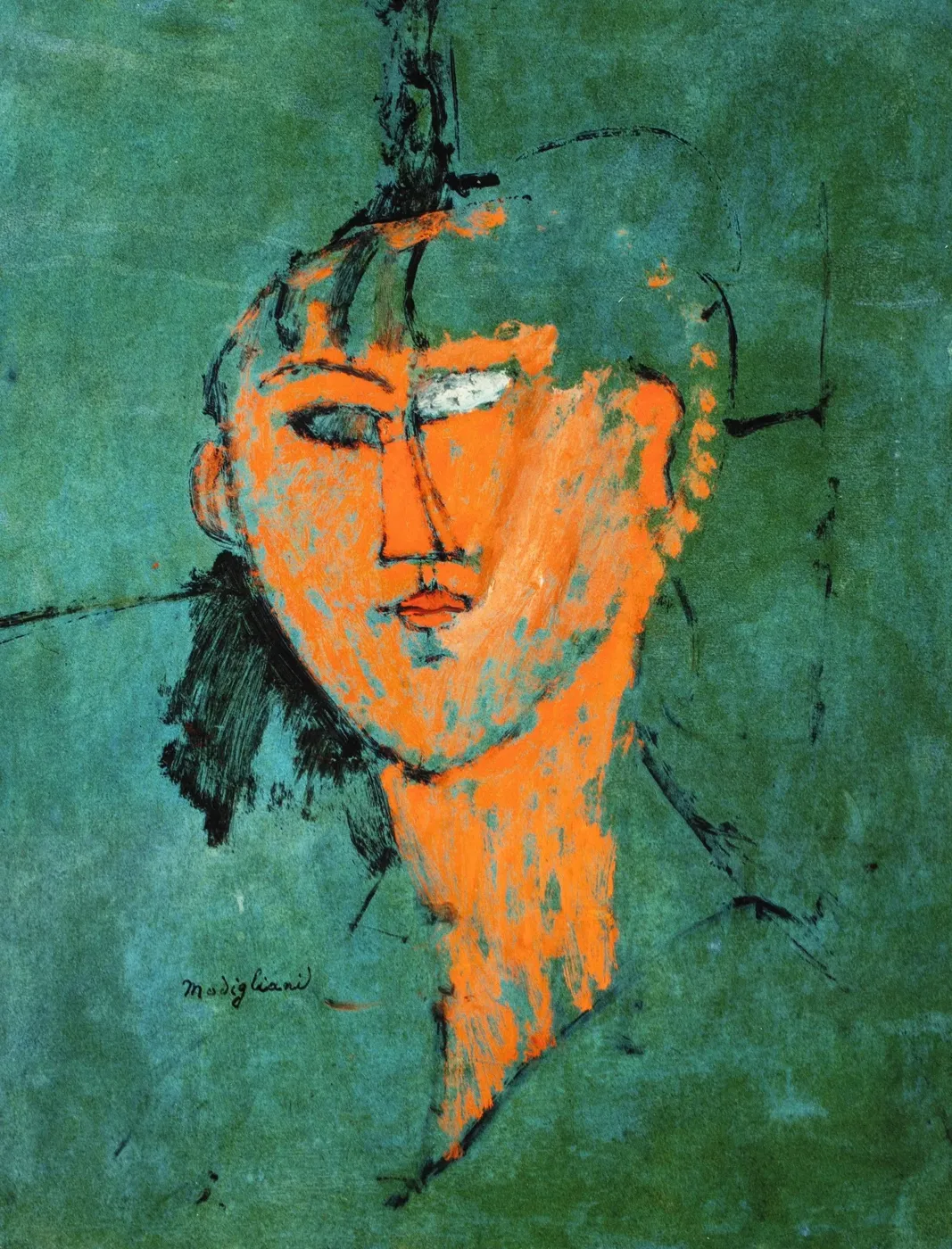
Amedeo ModiglianiTête Rouge, 1915
Frame 41.5 × 47 × 4.5 cm (16.3 × 18.5 × 1.8 in)
The Object
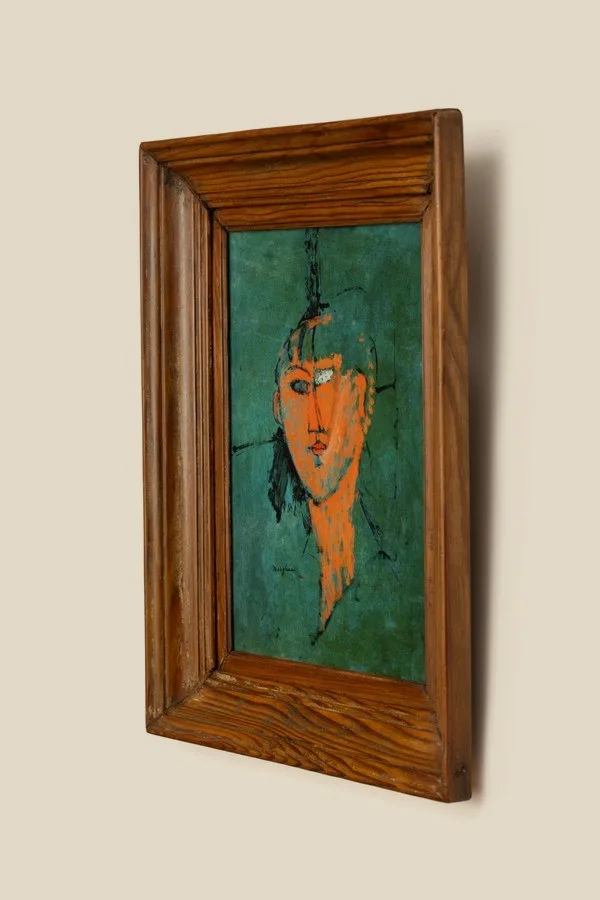
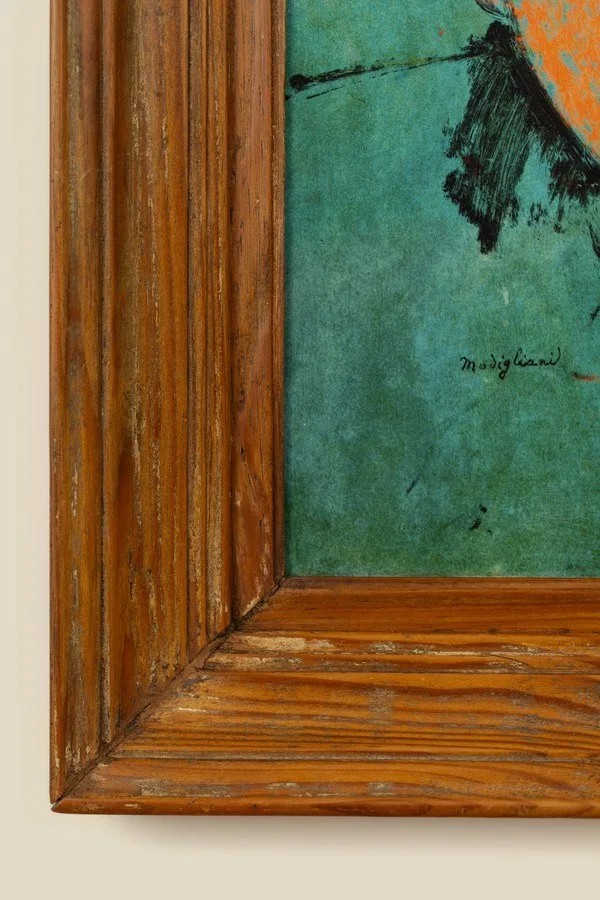
A sculptural 19th-century antique frame in natural wood, sourced individually in Paris — raw grain alive, moulding built up layer upon layer.
The Finished Object
A less familiar, more elemental Modigliani. The archival edition brings it to the wall; the raw, ungilded antique frame was found separately in Paris and matched to it by eye. While the print itself is an edition, this specific antique frame is unique. The two are paired once and will never be repeated.
€ 7,000 · approx $8,100
Genuine 19th-century antique frame, sourced individually in Paris · Archival pigment print on fine-art paper · UV-protective glazing · Signed Certificate of Unique Pairing
Ships insured from Paris within one week · Fourteen days to live with it · Trade pricing available Inquire for Trade Pricing
Ships insured from Paris within one week · Fourteen days to live with it · Trade pricing available Inquire for Trade Pricing
The Work
Everyone knows Modigliani’s elongated necks, the almond eyes, the serene oval faces. This is none of that. A less familiar, more elemental Modigliani — raw in colour and direct in expression. The red-orange face against deep green: not beauty as refinement, but beauty as force. The figure is barely held together by the line; it looks as though it might dissolve back into the ground it came from. The original, painted in 1915, is held by the Centre Pompidou — Musée national d’art moderne, Paris.
The Pairing
This frame is plain wood — no gilding. Look at the lower edge: the grain is rough, weathered, full of movement. Now look at the face — rough strokes, raw colour. The same roughness, the same directness, in wood and in paint. That is the reason for the pairing: an antique surface that wears its years openly, set against an image that hides nothing.
In the Space
Placed in a private lounge or a library — a room where the eye is allowed to stay on one thing.
More from Collection I